
Primary Health Care app launch with the South African National Dept of Health
The National Department of Health (NDoH) officially launched the mobile application of the Standard Treatment Guidelines (STGs) and Essential Medicines List (EML) for Primary Health Care Level in Pretoria on 25 November 2015. The mobile application was funded by the Department of Science and Technology, and developed by The Open Medicine Project, an organisation aimed at improving information access in healthcare by leveraging innovative mobile technology.
The STGs and EML is one of most cost-effective ways to deliver equitable access to affordable medicines that are safe, effective and improve the quality of patient care and clinical decision making.
The public and economic impact of the inefficient and irrational use of medicines is far-reaching. The launch of the mobile application of the STGs and EML for Primary Healthcare is seen as the first step toward the effective dissemination and implementation of the revised guidelines and promoting rational medicines use. “This is merely the dawn, not an event, as we embrace technology to leverage the potential of the STGs and EML”, said Mr Gavin Steel, Cluster Manager: Sector Wide Procurement, NDoH.
“The availability of the revised edition of the STGs and EML in mobile application format is intended to improve accessibility and acceptability to healthcare professionals at all levels of care. “The mobile APP leverages the capabilities of modern smart phone technology to facilitate efficient, point-of-care access to up-to-date medicine information”, said Dr Anban Pillay, Deputy Director-General: Health Regulations and Compliance Management, NDoH.
According to the Executive Director of the South African Medical Research Council, Dr Richard Gordon, “The launch of the Primary Health Care mobile APP is testament that investing in technology can change the ability to improve the delivery of health care.”
Access
The APP has been made available on most modern mobile devices such as smart phones, tablets and iPads. The content is fully available offline after initial download, so that even in remote areas with poor or no connectivity, health care workers can have access to the information.
Features and Tools:
1. To promote transparency, the revised edition of the Primary Health Care STGs and EML is accompanied by the level of evidence which is now reflected in the mobile application.
2. The guidelines presented in mobile application format have been colour-coded for ease of understanding and interpretation.
3. One can click from one guideline and be taken directly to another related guideline.
4. Search function: A health care worker can simply type a key word or a key symptom and find a list of related guidelines. This will facilitate efficient access to correct information.
5. Cardiovascular Risk Assessment Tool: This tool allows healthcare workers to efficiently calculate a patient’s percentage risk of having a cardiovascular event such as a stroke or a heart attack in the next 10 years.
6. Paediatric Drug Dosage Calculator: This tool allows healthcare workers to accurately calculate the weight or age-based dosage for the most common medications on the EML. This would reduce errors in prescription and reduce frustration from healthcare professionals.
7. Medicine Stock-Out Tool: This tool allows users the ability to report medication shortage and stock-outs directly to the NDoH.
8. The Adverse Drug Reaction Tool: Allows healthcare workers to report serious reactions to medications. This tool opens up the line of communication between healthcare workers and the NDoH.
9. Medicine Cost: The cost calculator shows a comparative cost of all the medicines on the EML.
10. ICD10 Codes: The recording of medical diagnosis information according to the international ICD10 standard is becoming more and more important in health care management and will be requirement for National Health Insurance. This tool provides a searchable database of ICD10 codes.
11. Directory Service: The APP contains a directory service of all the health facilities in the country. It provides the phone numbers and GPS location of every public health facility in South Africa.
Download the app now, just search PHC in the google play or apple iTunes store.
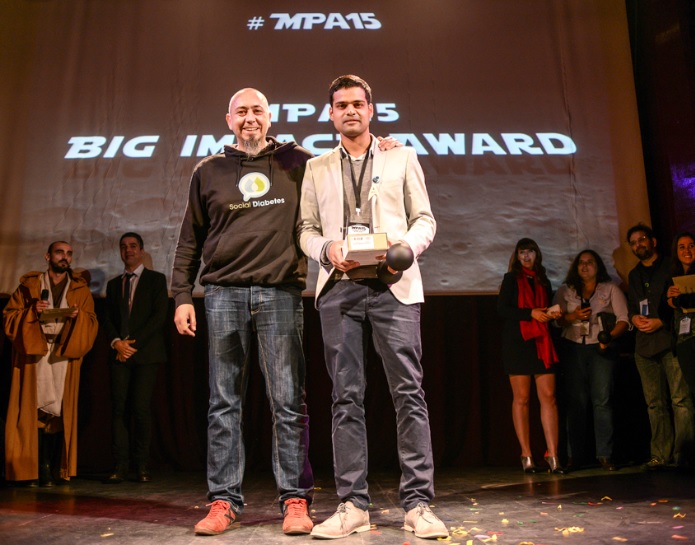
Locally Developed Medical App wins Global Big Impact Award
The Mobile Premier Awards is the largest Global cross-platform app showcase and competition in the mobile industry, providing a point of reference for the startup and app community during the Mobile World Congress, the biggest conference on Mobile Technology in the world. The 9th edition of the Mobile Premier Awards took place in Barcelona on March 2, 2015 and featured winning apps from AppCircus events and AppCircus challenges from 2014.
460 apps from all around the world compete in on-stage pitching competitions during AppCircus Challenges throughout 2014. The Mobile Triage App won the African AppCircus challenge, at the Mobile Web Africa 2014, and qualified for the finals in Barcelona this year, wherein 16 Finalist apps competed and are judged by a panel consisting of experts from Intel, Google and Amazon.
The Mobile Premier Awards grants 3 accolades for the Overall Top app, Audience award as well as the Big Impact Award. The Mobile Triage app won the Big Impact Award as the app with the most impact potential. As a result, the app was showcased live on the National Spanish Telvision Channel, BTV.
The Mobile Triage app was developed by The Open Medicine Project, a Cape Town based organization based at the Barn in Woodstock, founded by South African Doctors Yaseen Khan and Mohammed Dalwai. The company has produced a number of top medical apps which are used by over 30 000 (thirty thousand) healthcare providers around the world.
The Mobile Triage app is based on the South African Triage Scale (SATS), which is also used in many countries throughout the world, as it is a triage score designed for low-resouce settings. Triage is the process of sorting patients according to urgency in Emergency Settings, such as a hospital Emergency Room. It is vital that ill patients are indentified timeously and prioritized accordingly especially in busy emergency centres with a high influx and volume of patients. Devastating delays in treatment can occur if this is done incorrectly.
The Mobile Triage app allows healthcare workers to perform triage accurately, efficiently and safely by facilitating the identification of danger signs and symptoms, and colour codes patients according to priority as either Green, Yellow, Organge or Red. Additional features of the App now enable the calculation of Emergency drug dosages for children requiring resuscitation, as well as the shock-index, as an early indicator of shock in patients. Additonally, the app is enabled to generate important data on patient numbers, demographics, acuities which are vitally important for health facility managers. The app and system is also applicable to both the private and public sector and can be used by all levels of healthcare workers.
The Mobile Triage app was also piloted at Khayelitsha District Hospital in Cape town, in the Western Cape, during 2013 for 6 months where 1300 patients were triaged and an 88% increase in compliance to the SATS system was observed, indicating a significant upturn in accurate triage as well as a 50% decrease in triage time.
The Mobile Triage app and other initiatives by The Open Medicine Project seeks to support and facilitate the provision of timeous, quality and affordable healthcare services for citizens as a key National priority identified by the South African government. The Mobile Triage project is funded by the South African Medical Research Council (MRC), Strategic Health Innovation partnership (SHIP).
TOMPSA is currently situated at the Bandwith Barn who has provided mentorship and office space.